
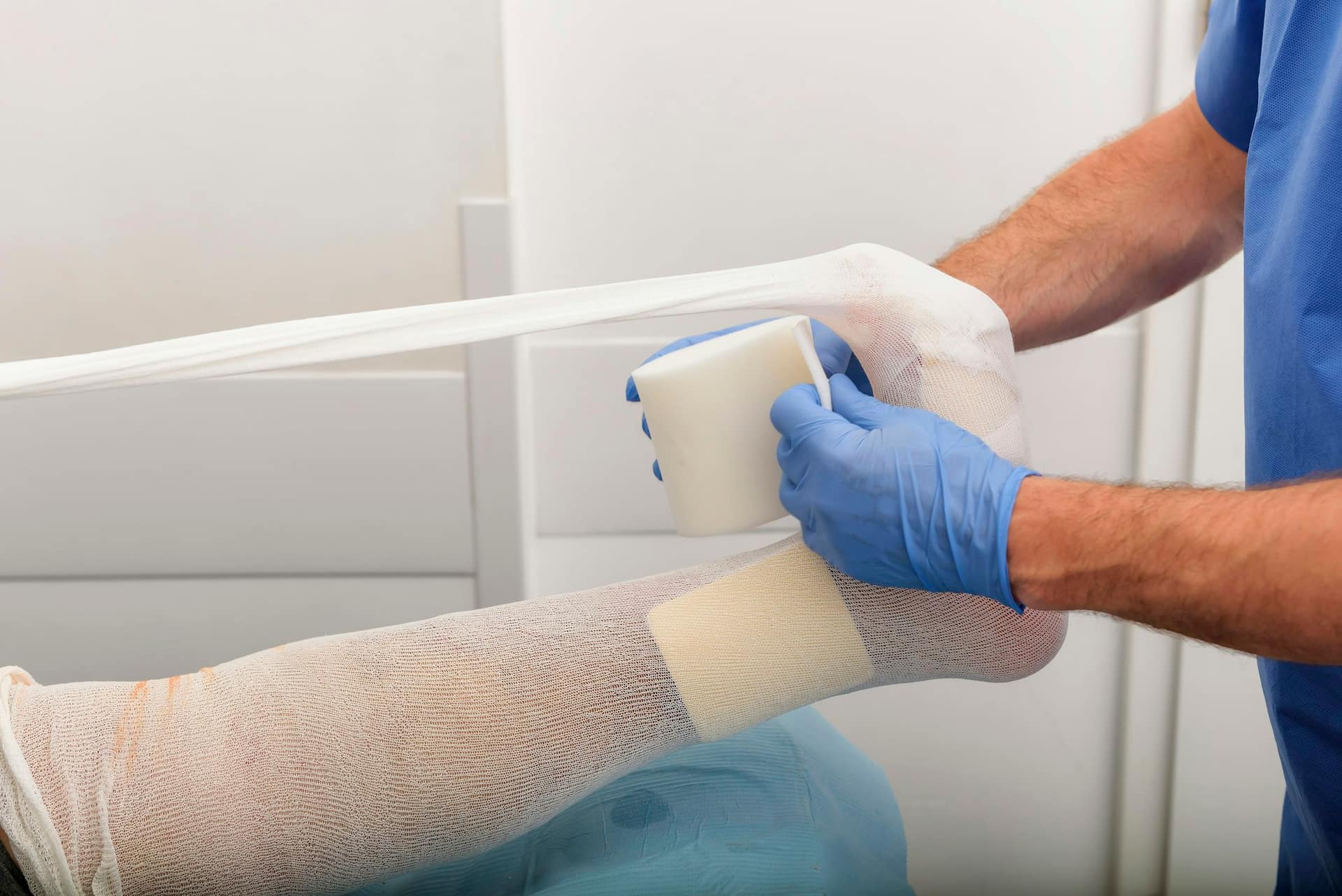
Wound & pressure care at home
Pressure sores and slow-healing wounds can often be cared for at home, not just in hospital. Our trained carers reposition, check the skin and look after pressure areas at every visit, and support the dressing routine your district nurse has set, all under a nurse-led plan, across Croydon and Bromley. We are CQC-registered for clinical care and rated “Good”.
Being discharged this week? Call us any time, day or night. We’ll be honest about what we can put in place, and how quickly.
- CQC-registered for clinical care
- Rated “Good”, all 5 areas
- Nurse-led by Roseline Fazal Masih
- Competency-checked per procedure
- Read our CQC report(opens in a new tab)
What it looks like at home
- Repositioning to a set schedule to take pressure off vulnerable areas
- Checking pressure areas daily across heels, the sacrum (base of the spine) and hips, and reporting any change
- Keeping skin clean and dry and applying prescribed barrier creams
- Helping use pressure-relief aids (cushions and special mattresses) correctly
- Supporting the dressing routine your district nurse has set, between their visits
- Watching for early signs of skin breakdown or a wound infection and following the plan
Who does what
Your care is planned and overseen by our Registered Manager, a registered nurse. The hands-on visits are delivered by carers we employ directly. Wound dressings and wound assessment are led by the district nursing or tissue-viability team (the NHS team that specialises in wounds), while our carers carry out the pressure-area care, skin checks and dressing support set out in their plan. We reinforce that plan; we do not replace it.
If something goes wrong
If a pressure area is breaking down, a dressing will not stay intact, or there are signs of a wound infection (heat, spreading redness, odour or a fever), carers follow the written plan: they report it to the district nurse or GP without delay, and call 999 if your relative becomes unwell in themselves. The plan names exactly who to call, and when.
Led by our Registered Manager
Every clinical package is led by Roseline Fazal Masih, our CQC Registered Manager and a registered nurse. Care is planned alongside the NHS teams already involved, and no carer takes on a clinical task until they have been trained and competency-checked for that exact task, for that exact person.
- CQC-registered for “Treatment of disease, disorder or injury”, rated “Good” in all five areas
- Competency checks per procedure, per person: never “trained once, assumed forever”
- One plan shared with your district nurses, GP and specialists
Worried about cost? Many complex packages are funded in full
NHS Continuing Healthcare can fund complex care at home in full, and it is not means-tested. Our funding guide explains the routes in plain English, and we can help with the application.
See funding optionsHow nurse-led care begins
- 1
Free home visit
We meet you (and, with your permission, the NHS team involved) to understand the clinical picture properly.
- 2
A nurse-led care plan
Our Registered Manager builds the plan (procedures, routines, escalation steps), shared with everyone who needs it.
- 3
Trained, competency-checked carers
Your carers are trained and signed off for your specific procedures before the first visit, and refreshed regularly.
Care at home vs hospital or a care home
| In this respect | At home with Fabulous | In hospital / a care home |
|---|---|---|
| Familiar carers | The same small, competency-checked team each visit | Whoever is on shift |
| Skin & pressure monitoring | Checked and logged at every visit, one-to-one | Shared across many residents |
| Attention | One-to-one, in your own home | Shared across a ward or home |
| Working with the NHS | One plan shared with your district nurse | Varies by setting |
| Family presence | Family there on your terms | Set visiting hours |
| Cost | Often funded in full by NHS Continuing Healthcare | Varies |
Wound & pressure care at home: common questions
Will your carers do the wound dressings, or does a nurse?
Wound dressings and wound assessment are led by your district nursing or tissue-viability team. Our trained carers carry out the day-to-day pressure-area care, skin checks and dressing support in their plan, under our nurse-led oversight. We reinforce the nursing team, we do not replace them.
What do carers actually do about pressure areas?
They follow a repositioning schedule, check the skin at every visit (heels, sacrum and hips), keep skin clean and dry with prescribed creams, and make sure cushions and pressure-relief mattresses are used correctly. Anything that looks like it is breaking down is reported to the district nurse straight away.
What happens if a wound looks infected at the weekend?
Carers follow a written escalation plan agreed with your clinical team: they report signs of infection to the district nurse or GP without delay, and call 999 if your relative is unwell in themselves. The plan sets out exactly who to call, day or night.
Can wound and pressure care be funded?
Many complex packages are funded in full through NHS Continuing Healthcare, which is not means-tested. Our funding guide explains the routes, and we can help with the application.
Last reviewed July 2026 · Reviewed by Roseline Fazal Masih, Registered Manager · Registered Nurse
For NHS discharge teams & case managers
We support wound and pressure-area care across Croydon & Bromley on a nurse-led plan, following the dressing routine your district nursing or tissue-viability team has set.
What we provide
- Per-carer competency records for repositioning, skin assessment and dressing support
- A written care and escalation plan shared with your district nursing team
- Repositioning and skin-check logs available on request
We aim to respond to discharge enquiries the same working day · Across Croydon, Bromley& nearby. Close to Croydon University Hospital and Princess Royal University Hospital.
Let’s talk about the care you need
A friendly chat with someone local who understands. We’ll listen first, then help you decide what’s right for your family.
Free home visit, no obligation. Prefer email? enquiries@fabuloushomecare.co.uk