
Guides & advice
What Is Domiciliary Care?
By the Fabulous Homecare team · Reviewed by Roseline Fazal Masih, Registered Nurse · Updated · 7 min read
Domiciliary care is simply care and support provided in your own home. Here is what it covers, who it is for, how it is regulated, and what it costs in the UK.
What does domiciliary care mean?
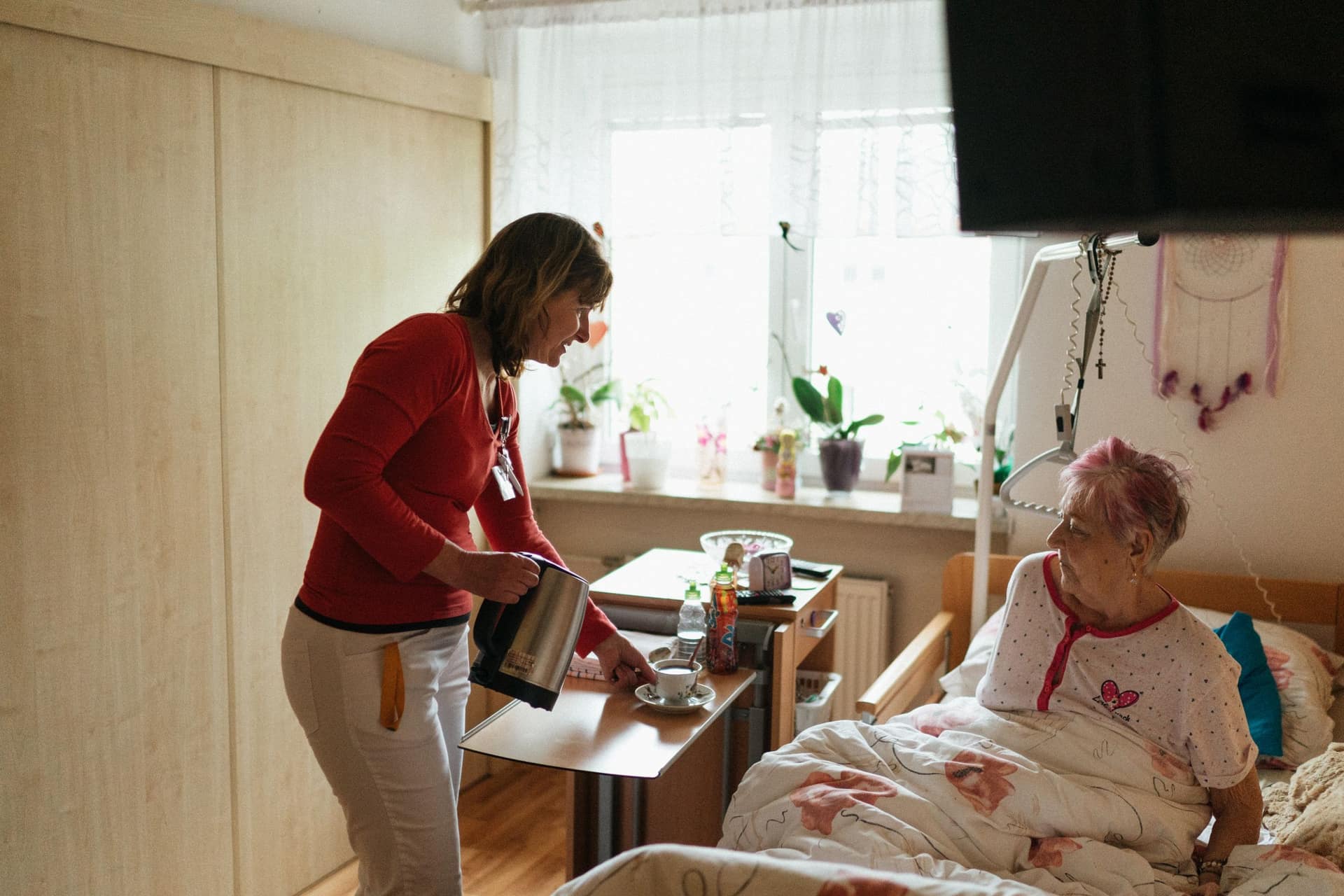
Domiciliary care is care and support provided in your own home. That is the whole definition. A trained carer comes to you at agreed times and helps with the things that have become difficult, then leaves, and you carry on living where you have always lived.
The word itself comes from domicile, meaning a place of residence, and it exists mainly because officialdom needed a term that distinguished care delivered at home from care delivered in a care home or hospital. You will meet it in council letters, hospital discharge paperwork, and inspection reports far more often than you will hear anyone say it out loud.
In practice, domiciliary care is delivered as scheduled visits. These might be a single half-hour call each morning to help someone wash and dress, or four visits a day covering getting up, lunch, tea, and bed. The person stays in charge of their own home, their own routine, and their own front door key, and the support is built around that rather than replacing it.
Is domiciliary care the same as home care?
For almost all practical purposes, yes. Home care is the everyday phrase, domiciliary care is the formal one, and they describe the same thing: support delivered where you live. If a council social worker mentions domiciliary care and a provider's website says home care, nobody is describing two different services.
There is one nuance worth knowing. Some people use home care as a slightly wider umbrella that also takes in live-in care, where a carer actually stays in the property, while domiciliary care is more often used for the visiting model. It is a soft distinction rather than a rule, and no two organisations apply it identically, so it is always worth asking what a particular service actually includes rather than relying on the label.
You will also hear care at home, care in the community, and social care at home used for the same thing. If the terminology is getting in the way, our guide to the types of home care lays out every option by what it actually does rather than what it is called.
What does domiciliary care include?
The content of a domiciliary care visit is set by a care plan agreed with you, so no two are identical. That said, the great majority of visits are built from the same set of tasks, and it helps to see them written down before you decide what you need.
- Personal care: help with washing, showering or a bed bath, dressing, oral care, and continence needs.
- Medication: prompting, or administering medicines where the care plan and training allow it.
- Meals and drinks: preparing food, supporting someone to eat, and keeping fluids up.
- Mobility: help to move safely around the home, in and out of bed, and to and from a chair.
- Household tasks: light cleaning, laundry, changing beds, and keeping the kitchen safe.
- Shopping and errands: collecting prescriptions, food shopping, and getting to appointments.
- Companionship: conversation and company, which is often the part families underestimate.
What is not usually included?
Standard domiciliary care does not cover nursing tasks. Wound dressings, injections, catheter changes, and anything involving a tracheostomy, PEG feed, or ventilator sit outside ordinary home care and need either a district nurse or a provider with nurse-led clinical competencies in place. We run that as a separate service, which you can read about on our complex clinical care page.
Heavy household work such as deep cleaning, gardening, or decorating is also outside the usual scope, as is anything that would need two carers for safe moving and handling unless that has been assessed and agreed in advance. A good provider will tell you plainly where the line sits rather than agreeing to everything and quietly falling short. If personal care is the part you are weighing up, our guide to personal care at home goes through it in detail.
Who is domiciliary care for?
Most people receiving domiciliary care are older and have reached a point where some part of daily life has stopped being manageable on their own. That might be a shower that has become unsafe, medicines that are being missed, or meals that are being skipped. It is rarely one dramatic event and much more often a slow accumulation of small difficulties, which is exactly why families find it hard to judge the moment to act. Our guide to the signs a parent may need help at home sets out what to look for.
It is not only for older people, though. Adults living with a physical disability or a long-term condition use domiciliary care to stay independent and in work. People recovering from surgery, a fall, or a stroke often use it for a few weeks and then stop. And families living with dementia use it to keep routines and surroundings familiar, which usually matters more than the tasks themselves.
How is domiciliary care regulated in the UK?
In England, any organisation providing personal care in someone's home must be registered with the Care Quality Commission. This is not optional or a badge of quality that providers opt into; it is a legal requirement, and operating without it is an offence. The CQC inspects registered providers, publishes a full report, and awards one of four ratings: Outstanding, Good, Requires improvement, or Inadequate.
Registration sits on top of the Care Act 2014, which sets out councils' duties to assess need and arrange support, and which is why the free needs assessment exists at all. Between them, the Act and the regulator define what good looks like: a written care plan, staff who are trained and checked, safe handling of medicines, and a route to complain that actually goes somewhere.
The practical advice is simple. Before you agree anything, look the provider up on the CQC register, and read the report rather than just the headline rating, because the detail tells you what the inspectors actually found. Fabulous Homecare is CQC-registered, and our current report is linked under Further reading below so you can read it for yourself. Ask what level of DBS check each carer holds: an enhanced check is the standard background check for anyone working with adults at risk.
How much does domiciliary care cost?
Domiciliary care rates vary by provider, region, time of day and the support involved. Our visiting care starts from £26 an hour, confirmed in writing after a free home visit. When comparing quotes, check the visit length, number of carers, any additional charges and what happens if your needs change.
Funding depends on both your assessed needs and the funding route. Council help normally involves a care-needs assessment and a financial assessment. The NHS may fund a package through Continuing Healthcare if you meet its needs-based criteria, without a means test. Attendance Allowance is a separate, non-means-tested benefit for eligible people over State Pension age. Our costs and funding page explains the options, and our guide to paying for home care goes further into each route.
Costs & funding explainedArranging domiciliary care with us
If you want to talk it through, we are a CQC-registered, locally run home care provider based in Croydon, supporting families across Croydon, Purley, Thornton Heath, New Addington, Bromley, Beckenham, and Orpington. You do not need a council assessment or a diagnosis to speak to us, and you do not need to have decided anything.
Everything starts with a free home visit. We come to you, listen to what is actually difficult, and set out honestly what would help and what it would cost. If that turns out to be less than you feared, or a different service altogether, we will say so.
Book a free home visitCommon questions
What is domiciliary care in simple terms?
Domiciliary care is care and support provided in your own home by a trained carer who visits at agreed times. It covers help with washing, dressing, medicines, meals, mobility and household tasks, so someone can carry on living at home rather than moving into a care home.
Is domiciliary care the same as home care?
In practice, yes. Home care is the everyday phrase and domiciliary care is the formal term used by councils, hospitals and regulators. Some people use home care as a wider umbrella that also includes live-in care, but the two words describe the same kind of support.
What does a domiciliary carer do?
A domiciliary carer follows an agreed care plan. That typically means helping someone wash and dress, prompting or giving medicines, preparing meals and drinks, supporting safe movement around the home, light household tasks, and providing company during the visit.
Is domiciliary care regulated in the UK?
Yes. In England, any provider delivering personal care at home must by law be registered with the Care Quality Commission, which inspects them and publishes a report and a rating of Outstanding, Good, Requires improvement or Inadequate. Carers should also hold an enhanced DBS check.
How much does domiciliary care cost per hour?
Rates vary by provider, location and support needed. Our visiting care starts from £26 an hour, confirmed in writing after a free home visit. Check the visit length, what is included and any additional charges when comparing quotes.

Reviewed by Roseline Fazal Masih
Registered Manager · Registered Nurse
Roseline Fazal Masih is the Registered Manager of Fabulous Homecare and a registered nurse. Fabulous Homecare is registered with and inspected by the CQC and rated “Good”; you can check our record independently on the CQC website.